Saturday May 2, 2026
University of Arizona Campus
Tucson AZ
10 CEs
7:30-8:00 (0.5 CE)
Course introduction: Cadaver Lab Safety, Expectations, Getting Started with Cervical and joint NSPM Procedures.
- Examine and illustrate proper cadaver lab safety and requirements while participating in the lab.
- Discuss the specific skill set needed to begin adding cervical and joint procedures to a NSPM service line.
8:00-9:00 (1.0 CE)
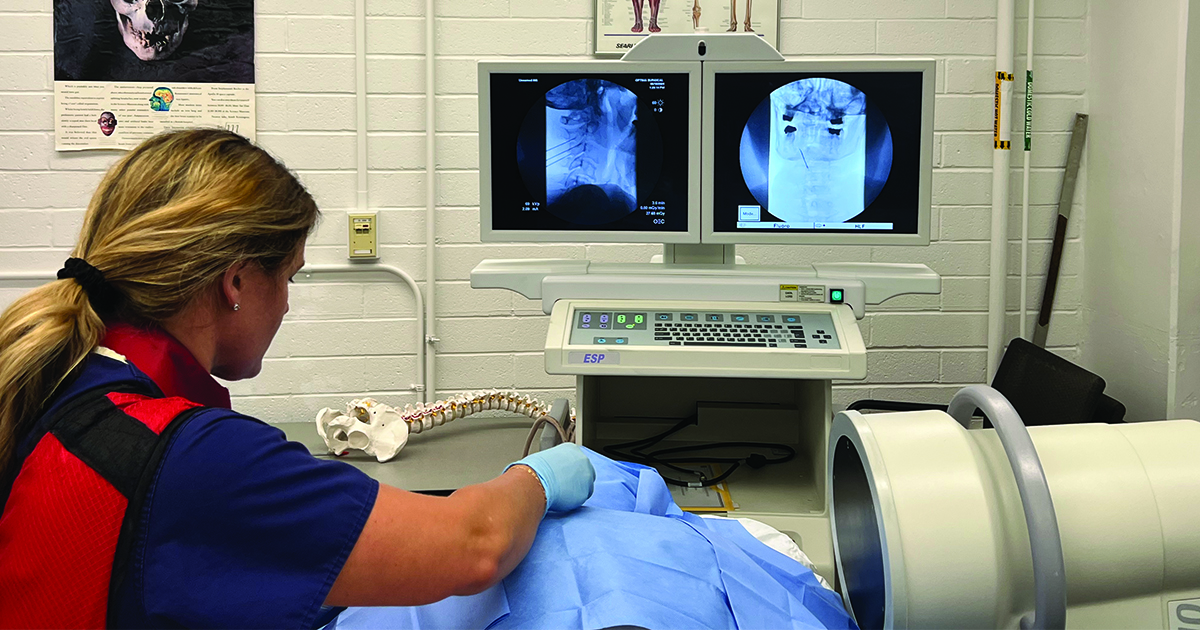
Understanding the cervical anatomical region and interpreting Ultrasound and Fluoroscopic imaging of the region.
- Examine and illustrate the fluoroscopic and ultrasound imaging in the cervical region.
- Discuss optimized approaches to patient specific anatomical variances.
9:00-10:00 (1.0 CE)
Cadaver Lab:
Advanced Cervical Medial Branch and RFA Techniques: Challenging anatomy, hardware, optimized positioning
- Verbalize an understanding of the cervical medial branch and RFA trajectory, how to establish a quality fluoroscopic view and determine optimal needle insertion with complicated anatomy and hardware.
- Perform medial branch block and RFA needle placement with assessment in the cervical region with assessment and remediation
11:00-12:00 (1.0 CE)
Cadaver Lab:
Cervical Stellate Ganglion Block and Advanced Cervical Interventions
- Verbalize an understanding of the cervical region interventional techniques, how to establish a quality fluoroscopic view and determine optimal needle insertion.
- Perform advanced cervical interventions injections in the cervical region with assessment and remediation
12:00-13:00 (1.0 Pharm CE)
Working Lunch: Discuss current trends in drugs used for NSPM procedures of the cervical region. Focus on local anesthetics, steroids, and adjuncts.
- Examine and discuss the current recommendations for steroid type and composition for epidural steroid injections.
- Discuss the pharmacological considerations of local anesthetic and steroid choice for NSPM procedures
13:00-14:00 (1 CE)
Physical examination of the upper extremities and joints (shoulders/hips/knees) for detecting potential cervical and thoracic pathology.
- Illustrate physical assessment tests for detecting potential cervical pathology
- Demonstrate physical exam tests, reflex assessment, classification, and red flag findings with assessment of the upper extremities and joints with assessment and remediation.
14:00-15:00 (1 CE)
Cervical and joints (hip/knee/shoulder) hands-on physical exam workshop.
- Illustrate and perform a variety of cervical/thoracic region and joints physical exam tests and reflex assessments.
- Participant explanation of physical exam test purpose and potential pathology intended to detect with assessment and remediation.
15:00-17:00 (2 CE)
Cadaver Lab
Advanced Sympathetic Blocks with Testing and Radiofrequency Ablative Techniques
- Examine and illustrate advanced sympathetic block techniques. Testing, radiofrequency ablation techniques, optimized needle trajectories and terminal needle placement with assessment
- Illustrate and discuss various techniques for achieving optimized terminal trajectories with variable cervical anatomical considerations with assessment and remediation
17:00-17:30 (0.5 CE)
Open Discussion with instructors: Physical Exam Review and Cadaver Lab Practice/Review
- Opportunity to discuss topics from the course for all participants.
- Opportunity to follow up with any physical exam, cadaver trajectory questions and assessment with remediation
Sunday May 3, 2026
University of Arizona Campus
Tucson AZ
7 CEs
8:00-9:00 (1.0 CE)
Cadaver Lab
Thoracic Region Blocks: Neuraxial Interventions, Test Blocking, Ablative Techniques Using Fluoroscopy and Ultrasound Guided Approaches
- Examine and verbalize an understanding of the thoracic region, optimized block trajectory with fluoroscopic and ultrasound guided techniques, how to establish a quality fluoroscopic/ultrasound view and determine optimal needle insertion and terminal needle position.
- Discuss cervical stellate ganglion troubleshooting and recommended injectate.
- Demonstrate image acquisition and perform thoracic region (Intra-articular, Epidural, Medial Branch, Costovertebral Joint, Intercostal nerve) needle placements with fluoroscopy and ultrasound with assessment and remediation
9:00-12:00 (2 CEU)
Cadaver Lab
Advanced Hip Joint management: Intra-Articular Injection, Test Blocking and Radiofrequency Ablative Techniques
- Verbalize an understanding of the anatomy associated with the hip joint and common pain generators.
- Discuss how to establish a quality fluoroscopic/ultrasound view and determine optimal needle insertion and safe terminal needle position.
- Demonstrate image acquisition and perform intra-articular injections, test blocking with fluoroscopy and ultrasound for testing and ablative techniques with assessment and remediation
10:30-12:00 (1 CEU)
Cadaver Lab
Advanced Knee Joint Interventional Management: : Intra-Articular Injection, Test Blocking and Radiofrequency Ablative Techniques
- Verbalize an understanding of the anatomy associated with the knee joint and common pain generators.
- Discuss how to establish a quality fluoroscopic/ultrasound view and determine optimal needle insertion and safe terminal needle position.
- Demonstrate image acquisition and perform intra-articular injections, bursal injections and fluoroscopy and ultrasound for testing and ablative techniques with assessment and remidiation
12:00-13:00 (1.0 CEU)
Optimized Radiofrequency Ablation: Local Anesthetics, steroids, post procedural medication considerations and Anesthesia Delarosa (post RFA neuralgia).
- Examine and discuss the current recommendations for local anesthetic, steroid type and composition for optimized radiofrequency ablation.
- Discuss the pharmacological considerations for post procedural management of potential post RFA adverse effects.
13:00-15:00 (2.0 CEU)
Cadaver Lab
Assessment and Remediation of all Techniques Presented in the Course.
- Verbalize an understanding of the anatomy associated with the cervical/thoracic/hip/knee/sympathetic region pain generators and underlying pathology
- Discuss how to establish a quality fluoroscopic/ultrasound view and determine optimal needle insertion and safe terminal needle position.
- Demonstrate image acquisition and perform intra-articular injections, bursal injections and fluoroscopy and ultrasound for injections, nerve testing and ablative techniques with assessment and remediation.
Pre-Course Online CEU Content
Dates Subject to change: Full Disclosure, I have 2 teenagers playing sports and the schedules are not finalized. I plan to send these 2 weeks prior to the course. If something changes all content will be available for review prior to the course. They will be available and emailed to participants as the lectures are designed to bolster the pre-course foundational knowledge.
Scott Rigdon
Managing Chronic Joint Pain: Hip and knee chronic pain through procedural intervention. Intra-Articular injections through radiofrequency ablation of sensory innervation.
- Examine and verbalize an understanding of the cervical region pain generators.
- Discuss cervical region interventional strategies, outcomes and optimized procedural pathways.
Cervical Region Ablative Techniques: Optimized pain generation testing and radiofrequency ablation of cervical pain generators cervical facet syndrome pain.
- Examine and verbalize an understanding of the cervical region pain generators, appropriate testing, and radiofrequency ablative techniques
- Discuss cervical region radiofrequency interventional strategies, outcomes and optimized procedural pathways.
Cervical Stellate Ganglion Blocks: Understanding the appropriate use of stellate ganglion blocks and the utilization of imaging techniques to safely approach the terminal trajectory.
- Examine and verbalize an understanding of the cervical stellate ganglion blocks.
- Discuss cervical stellate ganglion block interventional strategies with fluoroscopy/ultrasound, outcomes and optimized procedural pathways.
Radiation Safety: Foundational principles of x-ray imaging and essential understanding of how to minimize clinical x-ray radiation exposure.
- Examine and discuss the foundational underpinnings of x-ray imaging from a technological perspective.
- Illustrate the recommended safe practices when working with clinical x-ray imaging
Current trends in steroid selection in NSPM practice
- Describe the pharmacological profile of common steroid used in NSPM practice
- Discuss the controversy related to non-particulate and particulate steroids in NPSM practice
Introduction to MRI interpretation Part 1
- Describe and illustrate the basic physics of MRI, image optimization and modes/sequences to optimize imaging by anatomical region
- Define and recognize the normal anatomy in the lumbar, thoracic and cervical spines and compare to common types of pathology
- Discuss and differentiate between normal and abnormal MRI findings in the neuraxial region and how this correlates to patient presentation.